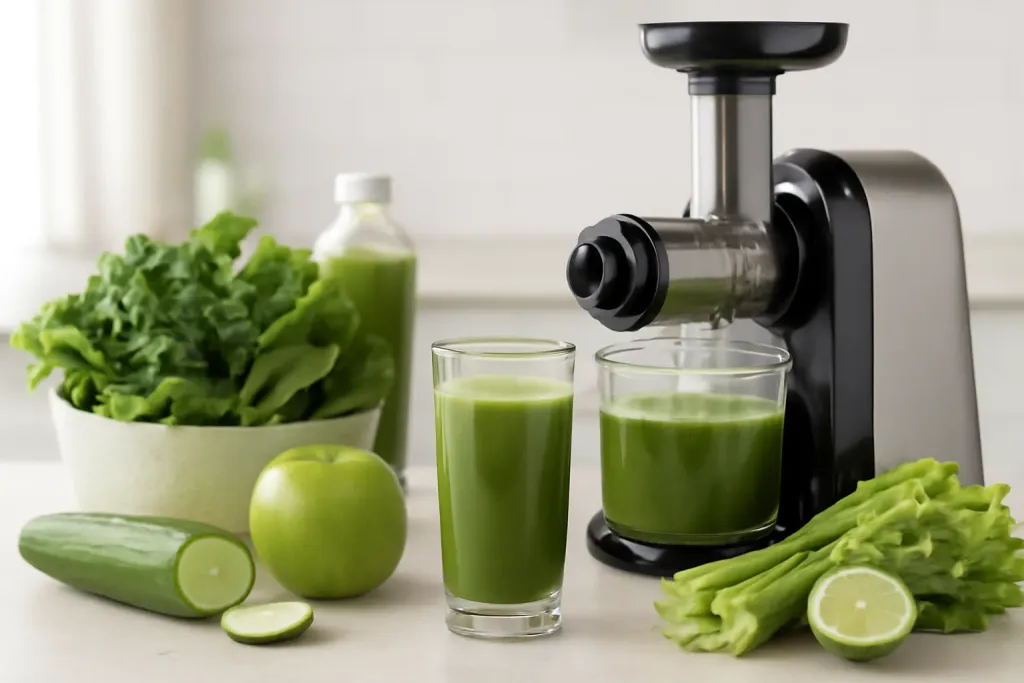
What Makes a Good Masticating Juicer for Wheatgrass
If you are shopping for a masticating juicer for wheatgrass, the main goal is simple: look for a machine that can handle small, fibrous greens without constant clogging or awkward prep. Wheatgrass is very different from soft fruit, so the best choice is usually a juicer designed to move slowly and press ingredients rather than shred them quickly.
For home use, a good match is one that accepts greens in a manageable feed chute, has a strong auger or pressing mechanism, and is easy enough to clean after a batch or two. The more complicated a juicer feels, the less likely it is to become part of a regular routine. Since wheatgrass is often used in small servings, ease of use matters just as much as raw power.
It also helps to think about how you will use the machine beyond wheatgrass. Many buyers want a juicer that can also handle celery, herbs, cucumber, spinach, and the occasional apple or citrus piece. If that sounds like your kitchen, then a versatile masticating juicer can be a better long-term choice than a single-purpose green juicer.
Why Masticating Design Is Often the Right Fit
The phrase masticating juicer refers to a slow juicing style that crushes and presses produce instead of spinning it at high speed. For wheatgrass, that design is often a better fit because fibrous blades of grass can be awkward for centrifugal machines and may require extra chopping or pushing.
In practical terms, masticating juicers are usually easier to pair with delicate greens. They tend to work in a controlled, deliberate way, which can be helpful when you are feeding in small handfuls of wheatgrass. That slower process is also one reason many shoppers choose this category when their main focus is leafy greens.
Another reason the design matters is texture management. Wheatgrass can be stringy, and a juicer that presses rather than tears may be a more comfortable choice for people who want a smoother result in the glass. While no machine removes the need for prep entirely, the right type can make the routine feel less fussy.
Single-Gear vs Dual-Gear: Which Type to Consider
When people compare the best masticating juicer type for wheatgrass, they often start with single-gear versus dual-gear machines. A single-gear model typically uses one auger to press produce through the juicing screen. A dual-gear model uses two interlocking gears and is often associated with a more intensive pressing action.
For wheatgrass, both styles can be suitable, but they serve different kinds of shoppers. A single-gear masticating juicer is usually the more approachable option for beginners because it is often simpler to assemble, use, and clean. If your kitchen routine is short and practical, that simplicity can matter a lot.
Dual-gear juicers may appeal to users who want a more specialized machine and do not mind extra setup. They are commonly considered by people who juice greens often and are willing to spend more time on preparation and cleanup. If you are shopping for a first wheatgrass juicer, many home users start with a single-gear model unless they already know they want a more advanced design.
Vertical vs Horizontal Juicers for Wheatgrass
The next big decision is the shape of the machine. Vertical masticating juicers are upright and compact, while horizontal models sit lower and usually feed produce in from the side. Each style can work for wheatgrass, but the right one depends on your counter space and how you like to prep ingredients.
Vertical juicers are popular with many home cooks because they can take up less width on the counter and often feel convenient for everyday use. They are a practical pick if you want a machine that blends into a busy kitchen and you are mostly juicing greens in small to moderate batches.
Horizontal juicers may feel more traditional for serious green juicing. Their layout can make them appealing to buyers who want more control over feeding ingredients and who do not mind a slightly larger footprint. If wheatgrass is the centerpiece of your juicing routine, a horizontal machine is worth considering because the design is often associated with greens-focused use.
There is no single winner for every kitchen. The best masticating juicer for wheatgrass is the one that fits your space, your cleanup tolerance, and your habit level. For some people, that means a compact vertical model. For others, it means a horizontal unit that feels better suited to frequent green juicing.
Features That Matter Most for Beginner Buyers
If you are new to wheatgrass juicing, focus on features that make the machine pleasant to use week after week. A large feed chute can reduce chopping, though it will not always eliminate the need to cut fibrous greens into shorter pieces. Easy assembly is another big benefit because a complicated machine can sit unused in the cabinet.
Cleaning is especially important. Wheatgrass can leave behind stringy pulp, so a juicer with straightforward parts and a screen that is not overly difficult to brush out will usually be easier to live with. If a model comes apart in a way that makes rinsing and reassembly simple, that is often more valuable than fancy extras.
Also pay attention to stability, countertop footprint, and storage. A juicer that wobbles, requires too many accessories, or takes up too much room may be hard to keep in regular rotation. For beginners, the best masticating juicer for wheatgrass is often the one that feels manageable on a normal weekday, not just on a shopping list.
Browse our recommended products
Our featured picks refresh periodically. While we update them, our editorial guides can help you find the right pick.
See our guidesHow to Use Wheatgrass With Less Hassle
Wheatgrass usually works best when you treat it like a small-batch ingredient rather than something to load into the juicer all at once. Cut the grass into shorter lengths, feed it gradually, and alternate with a small piece of compatible produce if your juicer’s instructions allow that approach. The goal is smooth movement through the machine, not forcing a large clump through at once.
Many home users also find it helpful to keep wheatgrass dry and trimmed before juicing. Long, tangled strands can be inconvenient, especially in a compact chute. If you are juicing with other greens, such as spinach or parsley, start with a small amount and adjust your workflow based on how the machine handles the texture.
For kitchen planning, think in terms of habit. A wheatgrass juicer is more useful if you can set it up quickly, use it for a short session, and clean it without much delay. That is one reason masticating models are favored by beginner-friendly green juice routines: they fit a steady, repeatable pattern.
Best Use Cases by Kitchen Setup
The right masticating juicer for wheatgrass depends a lot on where and how you cook. If you have limited counter space, a compact vertical model may be the easiest to keep accessible. If you like a dedicated juicing station and do larger green batches, a horizontal machine may feel more natural.
For households that want one appliance to do several jobs, versatility is important. A juicer that can also handle celery, cucumber, leafy herbs, and some soft fruit can be more useful than one that is narrowly optimized. That said, if wheatgrass is your priority, do not let extra versatility distract you from the basics: easy feeding, steady pressing, and simple cleanup.
Storage matters too. Before buying, ask whether the parts will fit in a cabinet or pantry without creating clutter. A machine that is easy to store is easier to use, especially if you plan to juice only a few times per week. Good storage compatibility often makes the difference between a gadget and a routine tool.
Quick Shopping Checklist for Wheatgrass Buyers
- Choose a masticating style rather than a high-speed juicer if wheatgrass is your main target.
- Decide whether you want a single-gear beginner-friendly model or a more specialized dual-gear option.
- Pick vertical for a smaller footprint or horizontal for a more traditional greens-focused layout.
- Look for easy assembly and simple cleanup, since fibrous greens can leave more residue behind.
- Check that the feed opening and auger design suit small leafy ingredients and short prep sessions.
- Consider whether you want a machine that also handles celery, herbs, cucumber, and fruit in mixed recipes.
- Make sure the juicer will fit your counter, cabinet, and daily routine before you buy.
If you keep this checklist in mind, it becomes much easier to narrow down the best masticating juicer for wheatgrass without getting distracted by features you may not use. The smartest purchase is usually the one that fits your real kitchen habits.
Final Take
For most home users, the best masticating juicer type for wheatgrass is the one that balances greens-friendly performance with everyday convenience. That usually means a slow juicer that handles fibrous greens well, is easy to set up, and does not create too much cleanup friction. Whether you lean toward single-gear or dual-gear, vertical or horizontal, the right answer depends on your space, your routine, and how often you expect to juice.
If you are a beginner, start with a design that feels simple and practical. If you already know wheatgrass will be a regular part of your kitchen routine, consider a more specialized model that better matches frequent green juicing. Either way, focusing on usability will help you choose a masticating juicer for wheatgrass that is more likely to earn a permanent spot on the counter.