The four kinds of citrus juicer
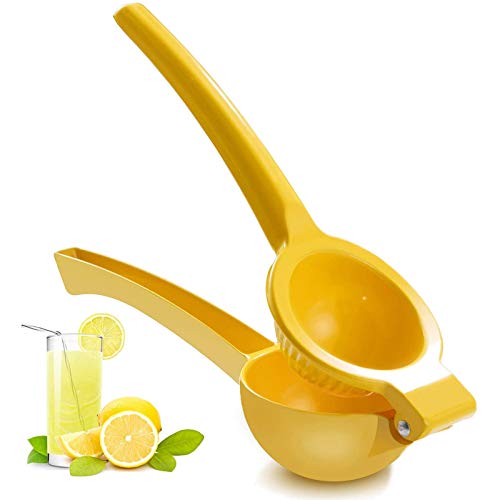
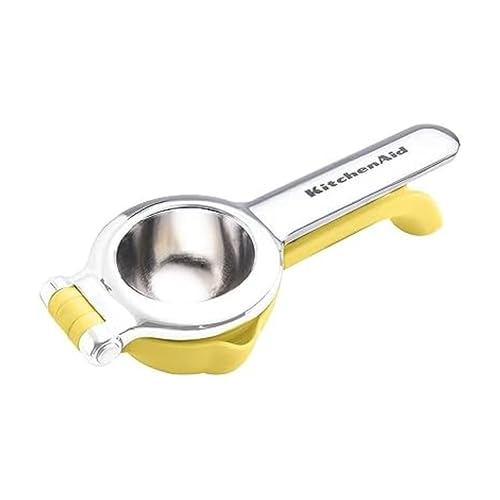
Handheld press (lever squeezer)
Two bowl-shaped halves hinged like pliers; a halved fruit sits cut-side down and the handles squeeze. It is small, has no moving parts to clean beyond the two halves, and works on one fruit at a time. Lemons and limes suit it best. Larger oranges and grapefruit do not fit most sizes.
Manual reamer
A ridged cone, often on a small bowl or with a strainer, that you twist a halved fruit onto. It is the cheapest and fits any size of citrus, but it takes wrist effort and lets pulp and seeds through unless it has a strainer. Our handheld press vs manual reamer guide compares the two in detail.
Electric reamer
The same cone, turned by a motor when you press a halved fruit down. It saves effort for batches, for example a pitcher of lemonade, and usually collects juice in a built-in jug. More parts to wash, more counter space. See manual vs electric.
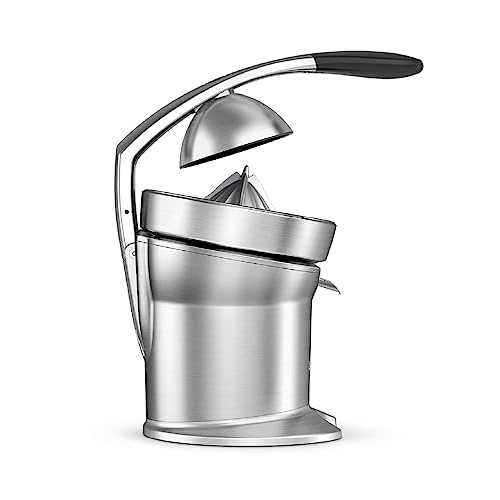
Press-style (lever arm) countertop juicer
A tall frame with a lever that presses a fruit half through a cone and strainer. It takes more room and has larger parts, but needs little effort and handles larger fruit such as grapefruit; see the grapefruit guide.
Match the juicer to the fruit
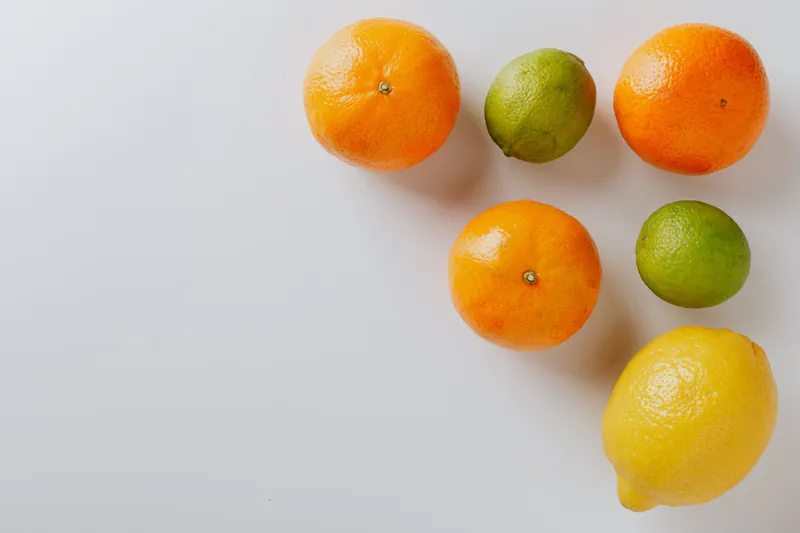
The fruit decides the type. Limes are small, so a handheld press needs a lime-sized bowl; a lemon press can crush a lime and leave juice behind. Oranges and grapefruit need a larger cone or bowl. The citrus juice calculator shows our juice estimate per fruit and how many fruits a recipe needs, using USDA edible weights and an extension-service figure for lemon juice. The numbers are estimates, since fruit varies with ripeness and variety; the calculator labels the sources and which fruits have only one.
A practical rule: if your recipe needs more than six lemons at a time, a handheld press stops being fun, and an electric reamer or press-style juicer starts to pay for itself in time.
Types at a glance
Our reading of how each design works. Typical traits, not specs of a named product.| Type | Best for | Effort | Parts to wash | Counter space |
|---|
| Handheld press | Lemons, limes, a few at a time | Low to medium | 2 halves (plus a seed catch if present) | Drawer |
|---|
| Manual reamer | Any citrus, small budget | Medium | 1 to 3 | Drawer |
|---|
| Electric reamer | Batches, pitchers, bar-style | Low | Cone, strainer, jug, base | Small footprint |
|---|
| Press-style countertop | Large fruit, regular use | Low | Cone, strainer, spout, frame | Tall footprint |
|---|
Pulp, seeds and the strainer
Most strainers are either a flat sieve or a perforated cone. Pulp-heavy juice is fine for lemonade and many recipes, but if you want it clear, pick a juicer with a fine strainer or pour through a sieve. Seeds are the real nuisance: reamers without a strainer let them fall into the juice, and bitter pith oils are released when a fruit is squeezed too hard. Roll the fruit on the counter first, cut it across the segments instead of through the stem end, and juice a half-fruit at a time.
Cleaning
Citrus is acidic and sticky, so rinse parts right after use. Most plastic cones and strainers are top-rack dishwasher safe, but check the maker's instructions, because acid and heat can mark some metals. A small bottle brush is useful for the spout and strainer holes. The cleaning accessories hub lists what is worth having.
Getting more juice from a citrus fruit
Fruit at room temperature gives more juice than fruit from the fridge, and rolling a lemon firmly on the counter breaks up the segments inside. Cut across the middle, not through the stem end, and juice the cut side down. Warming a cold lemon for ten seconds in the microwave also works for some people. We do not give a percentage gain because we have not measured it; the calculator's figures are sourced averages, not a promise for your fruit.
Storing citrus juice
Freshly squeezed citrus juice is unpasteurized like any other homemade juice. There is no official storage time, so our rule is the conservative one: use it soon, keep it cold, and freeze portions in ice cube trays if you want it later. The storage guide has the chart and sources.
How much citrus our recipes use
The size of the juicer you need depends on the volume of citrus, not the number of recipes. This table reads the lemon and lime amounts from our recipe data. All of them are small: the juicing step is a minute of work, which is why a hand tool is often enough.
For how much juice a lemon, lime or orange gives, with two sources and a size range, use the citrus juice calculator.
Choosing in three steps
- Count the fruit. Under about four lemons or limes at a time, a handheld press or reamer is simple; for a pitcher of lemonade or a batch of margaritas, a lever press or an electric reamer saves wrist effort.
- Check the cup size. A juice cup that holds a cup (240 ml) catches the juice of about four medium lemons by our calculator range; a larger fruit count needs a pitcher.
- Check the cleaning. Fewer parts and a removable strainer are quicker to rinse; seeds and pulp collect under the cone.
Zest before you squeeze
A squeezed half is hard to zest, so zest first. Wash the fruit under running water and scrub it, since the peel goes into the recipe, then zest with a fine grater and juice afterwards. Our citrus data lists a zest figure for fruits that have a source; where there is none, the calculator shows no number rather than a guess. Wrap leftover zest and freeze it flat if you will not use it within a day or two.
Category picks
- Lever-style handheld press. For lemon and lime drinks and cooking. Check the bowl size against your fruit.
- Manual reamer with a strainer. The cheapest way to catch seeds; best for small batches.
- Electric citrus reamer. For pitchers; check the jug capacity and parts count.
- Press-style countertop juicer. For grapefruit and larger oranges.
For margaritas and cocktail volumes, see our margarita guide; for lemons and limes at home, this one.
When a citrus juicer is not enough
A citrus juicer does not handle leafy greens, carrots or apples. If you want a green juice recipe with lemon (most of ours use half a lemon), the lemon can be juiced in the main juicer, or squeezed by hand into the finished glass. Our green lemonade recipe is built around citrus and uses a blender, and the juicers hub covers full machines.
Who each choice is for
Lemon and lime lovers
A handheld press or reamer; small, cheap, quick to rinse.
Batch makers
An electric reamer or press-style juicer saves your wrists.
Grapefruit drinkers
Press-style, because most handheld presses are too small.
Green juice makers
You need a full juicer as well; citrus is a garnish there.
Questions this page answers
How many lemons make a cup of juice?
About six to eight medium lemons by our two-source data, depending on the fruit. The citrus juice calculator shows its sources and ranges.
Is a manual or electric citrus juicer better?
Manual is cheaper and smaller; electric saves effort for batches. See the linked comparison for the details.
Can I use a regular juicer for citrus?
A masticating juicer can, with the rind removed. A centrifugal juicer will, but with the rind and pith removed first. A citrus juicer is simpler for citrus only.
Can I juice limes in a citrus juicer made for lemons?
Usually yes if the cone or press head is the right size; limes are smaller, so a press sized for lemons may leave juice behind. Check how the press seats the fruit.
Sources: USDA FoodData Central; NDSU Extension FN198.
General buying information, not medical or nutrition advice. We have not tested these products hands-on; specs come from the maker pages named above. See how we choose.