What a portable blender does well, and where it stops
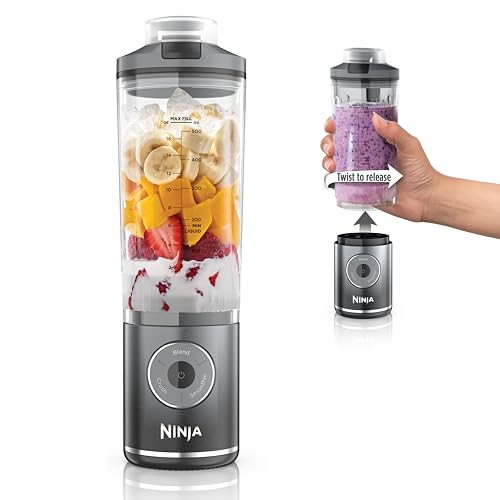
A portable blender is a small cup with a blade base and a rechargeable battery. You add liquid and soft ingredients, close it, press a button and blend, then drink from it or pour out. It suits an office, a gym bag, a hotel room or a campsite, wherever there is no kitchen. Its limits are the battery and the motor: ice, frozen fruit and fibrous greens put load on both, so it can stall or blend for fewer cycles per charge.
If you mostly blend at home, a personal blender is more powerful for less. The portable blender buying guide works through that decision.
Battery life, explained
Makers state battery life in different ways: number of blends per charge, minutes of blending, or milliamp-hours (mAh). Blends per charge is the most useful, but it depends on how long each blend is and what is in it. Soft fruit and liquid use less battery than frozen fruit. When a page gives no figure we say so; we have read none for a named model in this update. See the battery life guide for how to compare the numbers fairly.
USB-C or proprietary charging
A USB-C port charges from any common phone charger or power bank, so you are never stranded by a missing cable. A proprietary cable is smaller and sometimes magnetic, but a lost cable is a lost blender. Prefer USB-C unless the cable detail matters to you, and check that the port is covered against splashes. Details here.
Cup size and what fits
Most portable cups are small, which limits a serving. A single serving of our green smoothie is about 10 fl oz, so a cup of about 14 fl oz leaves room; a cup of 10 fl oz holds the finished smoothie but not the dry ingredients before blending.
Common sizes. 'Good for' is our calculation from recipe yields, not a product claim.| Cup size | Millilitres | Good for |
|---|
| 10 fl oz | 295 ml | A shake or a small smoothie; no headroom for greens |
|---|
| 14 fl oz | 415 ml | One serving with some leaves |
|---|
| 17 to 20 fl oz | 505 to 590 ml | A generous serving; heavier to carry |
|---|
At the gym or on a commute
Use a leakproof lid and carry the cup upright, since a small amount of residual smoothie can leak through the blade gasket. Pack dry ingredients in a small container and add liquid at the gym tap. After blending, rinse at once; do not let the sticky blade assembly dry. Our gym guide has a packing list, and the travel cups hub helps with the cup you drink from.
Safety and care
A portable blender should not run unless the lid is closed, and it should not be washed with the base submerged. Do not blend hot liquids unless the maker says it is safe, since heat and pressure build up in a closed cup. Charge on a hard surface and do not leave a lithium-ion device charging unattended.
What blends well in a small battery cup
Soft, high-water ingredients work: banana, berries, yoghurt, milk or plant milk, coconut water, ripe mango, cooked oats. Spinach blends in small quantities, and our green smoothie recipe uses 60 g (two packed cups) for two servings, so a single serving in a portable cup is about one packed cup. Frozen fruit and ice are harder: let frozen fruit soften for a few minutes, cut it small, and add more liquid. Fibrous stems, kale ribs, and raw root vegetables are usually too much for a battery cup, and these are better in a high-speed blender or a juicer.
Cleaning the blade assembly
Portable blenders have a blade base that cannot be submerged, since it holds the motor or battery in many designs. The cleaning method most makers describe is the same: fill the cup a third with warm water and a drop of soap, blend for 10 to 20 seconds, rinse and air-dry. Remove and rinse the gasket if the design allows it. A small bottle brush reaches the corners. Check the maker's manual: a few cups are dishwasher safe and most bases are not.
Comparing models when the specs are thin
Portable blender listings often give a cup size, a motor claim and a battery capacity in mAh, but not blends per charge or noise. When the figure is missing, write it down as unknown instead of assuming. Then use three tie-breakers: a removable, washable gasket; a USB-C port; and a warranty you can read. A maker that publishes a manual with the blade-cleaning steps and the stated limits on ice and hot liquids is easier to trust than one that does not. We list a model in the future only after reading those pages, and log what we read in our spec log.
Scaling our blender recipes to a small cup
Portable blender cups are small, so make one serving at a time. Our blender recipes are written for two servings; dividing each ingredient by two gives a single-cup batch. The table does that sum from the recipe data.
Divided from the two-serving recipes; yields count 1 g of blended food as 1 ml. Check your cup's max line.| Recipe | Food per serving | One serving makes | Ingredients for one serving |
|---|
| Green smoothie | 292 g | about 10 fl oz (296 ml) | 30 g spinach, 59 g banana, 83 g pineapple, 120 g coconut water |
|---|
| Green lemonade | 436 g | about 12 fl oz (355 ml) | 71 g lemons, 34 g lime, 75 g cucumber, 6 g spearmint leaves, 240 g cold water (360 ml in the blender, 11 g honey |
|---|
If the cup is smaller than the serving, make half the amounts and keep the same order: liquid first, then soft, then leaves.
Decide in three steps
- Match the cup to one serving. About 10 to 12 fl oz of finished drink is what our recipes make per person.
- Check how it charges. See USB-C against proprietary cables.
- Check how you will clean it. A cup with a removable blade base is easier to wash at work than a sealed one; see the gym guide.
Who a portable blender suits
It suits one person who makes a single, soft drink away from a kitchen: at a desk, in a gym bag, on a trip. It does not replace a kitchen blender for batches, frozen fruit every day or hot soup. A useful test is the last three smoothies you made: if each was under 12 fl oz and used soft ingredients, a small cup will do; if not, plan on a plug-in blender and keep the portable as a second.
Carrying one: a short checklist
- Charge it the night before and check the light.
- Pack dry ingredients such as oats or spinach in a bag and add liquid at the destination.
- Rinse the cup straight after use, even if only with water.
- Never run it empty, and never blend hot liquid.
Check the maker's guidance for each of those points; blades and seals are the weak spots, and limits differ by model.
What a small cup cannot do
A small motor and cup suit soft fruit, yoghurt, a handful of leaves and liquid. They are a poor fit for a full green smoothie with whole kale stems and frozen fruit, where a stalled blade is likely. If that is your daily drink, read the personal blenders hub first: the plug-in motors there are built for it.
Category picks
- USB-C rechargeable, about 14 fl oz. The practical default.
- Larger cup with a stronger motor. If you add frozen fruit.
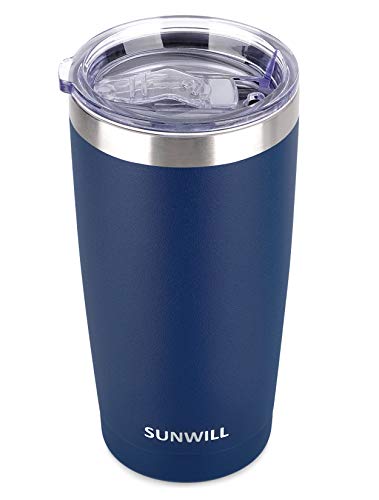
- Blender bottle with a spill-resistant lid. For commuting.
The cards below link to Amazon searches for these types.
Who each choice is for
Office or desk
A small USB-C blender.
Gym
A cup with a leakproof lid and a travel cap.
Travel
USB-C so any charger works.
Questions this page answers
How many blends does a charge give?
It varies by maker, by what you blend and by how long. We have not confirmed a figure for a named model.
Can a portable blender crush ice?
Some can; many struggle. Check the maker's own statement and expect shorter battery life.
Is USB-C better?
Practically yes: any charger works.
How much can a portable blender make at once?
That depends on the cup. Our blender recipes work out to about 10 to 12 fl oz per serving, so a cup with a max line near that will do; check the max line, not the cup's total capacity.
Sources: USDA FoodData Central.
General buying information, not medical or nutrition advice. We have not tested these products hands-on; specs come from the maker pages named above. See how we choose.