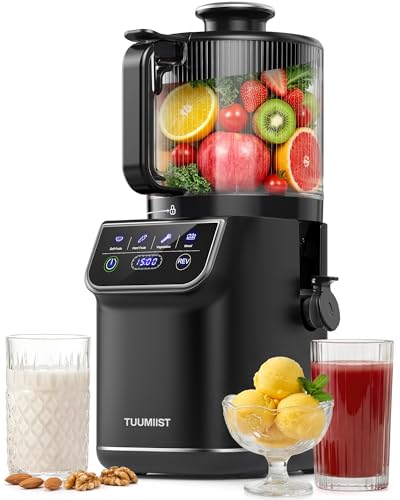
What "cold press" means on a home juicer
"Cold press" began as a description of hydraulic presses: produce is wrapped or bagged, then squeezed under pressure with no auger or blade. Those machines are larger and costlier than the countertop juicers most people shop for. On store shelves the same words are used on slow masticating juicers, and sometimes on fast ones too. The label is marketing, not a standard.
So when you search for a cold press juicer machine, you are almost always choosing a slow masticating juicer. The practical questions are the ones in the sections below: auger layout, chute width, how many parts you must wash, how loud it is, and how long the maker will stand behind it. We do not repeat claims that slow juicing preserves more nutrients or gives dramatically more juice; those come from makers and we have not tested them.
How a masticating juicer works
Produce goes down a chute into a chamber. A single auger, a screw-shaped piece, turns slowly and crushes the produce against a fine screen. Juice flows through the screen to a spout; the pulp is pushed out a separate outlet. Slow means slow: Hurom lists an auger speed of 50 RPM for the H320 and 90 RPM for the H400, and a motor of 150 W on both. The H320 also lists a spinning brush at 17 RPM that sweeps the screen as it works, which is a design answer to the main weak point of slow juicers, clogged screens.
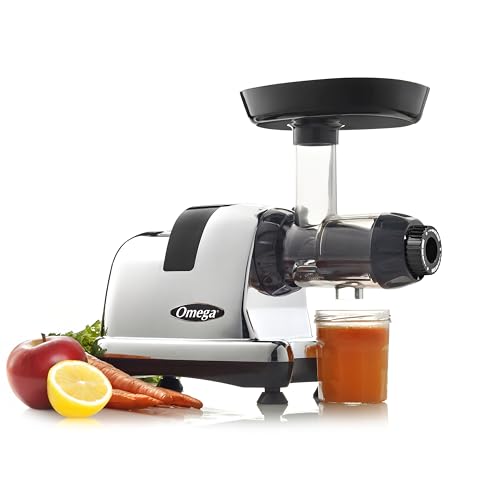
Two layouts exist. A vertical juicer stands the chamber upright and has a small footprint, which suits most kitchens. A horizontal one lays the auger on its side, which tends to be longer, handles fibrous leaves and wheatgrass well, and can often do extras such as nut butters. The vertical vs horizontal guide works through the choice. Both Hurom models we checked are vertical in design, though Hurom's pages do not use that word; the classification is ours.
The two confirmed models
These are the only masticating juicers whose specs we could read on the maker's page. They differ more than their shared 150 W motor suggests.
Confirmed models only, read from each maker's own page on 2026-11-14. Blank cells say "not stated".| Model | Type | Speed | Power | Feed chute | Parts that touch food | Noise | Warranty |
|---|
H320 Slow Juicer
Hurom | Slow juicer (our classification: masticating, auger-based) | 50 RPM auger | 150 W | 136 mm (5.4 in) | 9 listed parts that touch food (auger, 2 strainers, spinning brush, chamber, hopper, juice and pulp containers, pusher); count is ours from the box list, maker gives no number | not stated | 10-yr motor / 2-yr parts (Hurom FAQ); product page advertises 15 years — confirm at purchase (source) (product page) |
|---|
H400 Easy Clean Slow Juicer
Hurom | Slow juicer (our classification: masticating, auger-based) | 90 RPM auger | 150 W | 45 mm (1.8 in) | 7 listed parts that touch food (two-part auger, chamber, hopper, pusher, juice and pulp containers); count is ours from the box list | not stated | 10 years motor, 2 years parts (brand warranty; only if bought from Hurom.com or an authorized seller) (source) |
|---|
Spec-check log: every value above is in docs/spec-log.csv with its source. Models we could not read on the maker's page are left out, not guessed. Prices are not shown because they change daily.
The H320 has the wide chute (136 mm, roughly 5.4 in) and a 2 L hopper, so produce can go in with less cutting and a larger batch fits. The H400 has a 45 mm chute (about 1.8 in), so produce must be cut smaller, but it turns faster (90 RPM against 50 RPM), and its two-part auger is described by the maker as easy to take apart. Hurom's chamber capacities are 500 ml for the H320 and 550 ml for the H400. The H320 lists nine parts in its box that touch food; the H400 lists seven. These counts are ours from the box lists, since Hurom gives no number.
Chute width decides your prep time
On a slow juicer the chute is the first spec to read. A narrow chute is not a defect, but it moves effort from the machine to you. If you juice a bunch of celery, three cucumbers and a handful of kale, a 45 mm chute needs everything cut into thin lengths, while a 136 mm chute accepts a whole apple. Over a week the difference is easily ten minutes. Our feed chute guide has a practical way to measure what you actually juice before you shop.
Cleaning and parts
Slow juicers have fine screens and an auger that pulp packs into, so the daily job is the same for every brand: rinse the parts right after juicing, before pulp dries, and use the supplied brush on the screen. Parts are what separate models. A machine with fewer pieces that come apart without tools is quicker to wash, and the count matters more than any other cleaning claim. Hurom says its models have "fewer parts" without a number; we list the box contents so you can count.
For method and timing, see how often to clean a juicer and cleaning the mesh screen. The cleaning accessories hub covers brushes.
Warranty and where you buy
Hurom's FAQ gives 10 years on the motor and 2 years on parts for slow juicers bought from Hurom.com or an authorized seller. The H320 product page banner says 15 years, so the pages disagree; check the policy at checkout and keep your receipt. In general, a long motor warranty tells you the maker expects the motor to last, while parts such as screens and augers wear and are the part people replace. If a third-party seller is not authorized, the warranty may not apply at all.
Choosing in four steps
- List what you juice most. If leafy greens and herbs make up most of your weight, you want an auger design. Our recipe data shows how leafy a typical green juice is: the leaf-and-herb share of the juicer recipes on this site runs from 0% to 21% by weight.
- Check the chute against how you prep. Hurom lists 136 mm (5.4 in) for the H320 and 45 mm (1.8 in) for the H400. A 45 mm chute means cutting an apple into strips; a wide one takes most of it whole.
- Count the parts you will wash. Hurom's box lists nine food-contact parts for the H320 and seven for the H400 (our count; the maker gives no number).
- Read the warranty wording. The H320 shows two different warranty claims on Hurom's own site, so confirm the term at the time you buy.
Category picks when no model is confirmed
Beyond the two Hurom models we have not confirmed a specific machine, so these are categories, with what to check in each:
- Compact vertical slow juicer. For small counters and one or two glasses a day. Check chute width, number of parts and whether the screen can be brushed in the sink.
- Large-hopper vertical juicer. For batch juicing a few glasses at once. Check the hopper size and whether it can run continuously; Hurom lists up to 30 minutes of continuous use for both models.
- Horizontal masticating juicer. For wheatgrass and heavy greens. Check footprint and whether attachments are included.
The category cards below link to Amazon searches for these types, not to one listing.
Is a slow juicer worth it?
That depends on your produce and your patience. Our worth-the-price guide weighs it against a fast juicer and a blender. The short version: choose a slow juicer if you juice greens several times a week and value quiet; choose a fast one if you juice rarely and want speed. Either way, wash produce first and drink fresh juice soon; there is no official storage time for unpasteurized homemade juice, as our storage guide explains.
Who each choice is for
Daily green juicers
Slow juicers handle kale, spinach and herbs through an auger; you accept chopping and a longer session.
Early risers in shared homes
Slow machines are usually quieter than fast ones, though makers give few decibel figures. Hurom gives none.
Wheatgrass drinkers
A horizontal slow juicer is the usual pick; read the wheatgrass guide.
Questions this page answers
Is every cold press juicer a masticating juicer?
No. True cold presses squeeze bagged produce under pressure with no auger. The label is also used on slow masticating juicers and some fast ones, so check the mechanism in the spec sheet.
Do slow juicers keep more nutrients?
Makers claim so; we have not tested it and do not repeat the claim. Nothing on this page depends on it.
Which of the two Hurom models has the wider chute?
The H320: Hurom lists 136 mm (5.4 in) against 45 mm (1.8 in) for the H400.
What is a masticating juicer's feed chute width?
It varies by model: Hurom lists 136 mm (5.4 in) for the H320 and 45 mm (1.8 in) for the H400. Measure what you juice before choosing.
Do masticating juicers have more parts to clean?
Hurom's box lists nine food-contact parts for the H320 and seven for the H400 (our count). Breville's pages give no count for its fast juicers, so we cannot compare.
Sources: Hurom H320; Hurom H400; Hurom FAQ.
General buying information, not medical or nutrition advice. We have not tested these products hands-on; specs come from the maker pages named above. See how we choose.