What high-speed means
"High-speed" is a label with no standard behind it. In practice it means a countertop blender with a motor large enough, and a blade and jug shaped well enough, to turn spinach, kale, frozen fruit and sometimes nuts into a smooth blend. Makers state motor power in watts or horsepower, and some state blade speed. Without confirmed maker pages we cannot compare them here, so use the checks below on whichever spec sheet you read.
Why greens are the test
Spinach blends in almost any blender. Kale stems, collards and wheatgrass do not: they leave flecks unless the motor and blade can pulverise fibre. A good test is the maker's own instructions for greens, and the blending program for smoothies. Our buying guide for green smoothies covers what to read, and the green smoothie recipe gives a measured starting point of 60 g spinach, a banana, pineapple and coconut water for two.
Jar material and size
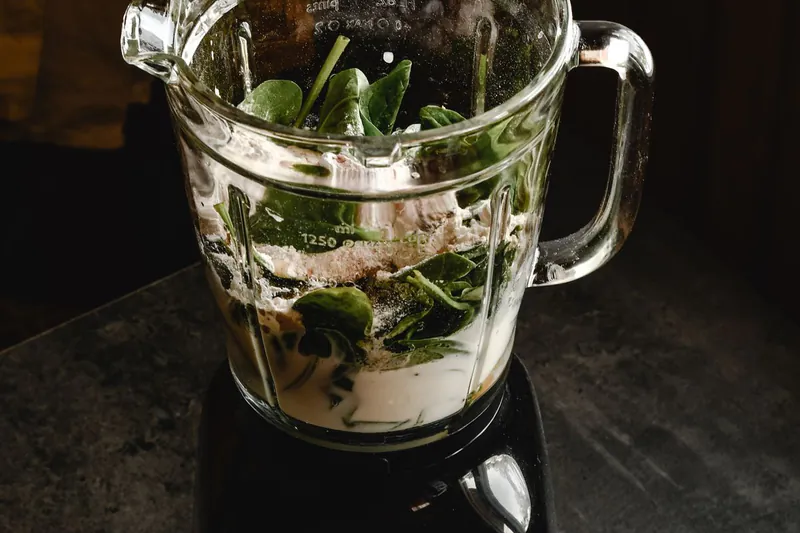
High-speed jugs are usually plastic (often a copolyester) or glass. Plastic is lighter and survives a drop; glass resists scratches and odour but is heavy. The right size depends on batch: a 48 to 64 fl oz jug makes a family batch, a smaller jug is easier to store. See jar material explained.
Noise
A strong motor is loud. A decibel figure is the only comparable measure, and few makers publish one. We explain why and what to do about it in how loud is a high-speed blender. A rubber mat and a lid cover reduce rattle; a short blend reduces annoyance.
Beyond smoothies
A strong blender also makes nut butter, soups, sauces and frozen desserts. See nut butter and smoothies. If that is your goal, the motor and a tamper matter more than the jug. If your goal is just green smoothies for one, a personal blender may be enough.
Cleaning
The easy way to clean a jug blender is to fill it halfway with warm water and a drop of soap, run it for 30 seconds, rinse and air-dry. Take the blade assembly out only if the maker allows it. Check the gasket regularly.
How to read a high-speed blender spec sheet
- Rated versus peak power. Some makers print peak power (a short surge) and some print rated power (what the motor sustains). A 1,500 W peak is not the same as a 1,500 W rating. Look for the label and compare like with like.
- Watts versus horsepower. One horsepower is about 746 W. A maker that quotes horsepower for one model and watts for another is hard to compare, so convert before you decide.
- Jug capacity versus working capacity. A 64 fl oz jug does not blend 64 fl oz; the max-fill line is lower, and frozen items take space. Our green smoothie makes about 20 fl oz for two servings, so a 32 fl oz jug is plenty for one recipe and a family-size jug is only needed if you double or triple it.
- Programs and speed dial. Preset programs run a fixed ramp and timer; a manual dial gives control. Neither is required; a variable speed and a pulse button cover most jobs.
- Warranty. Warranty length and what it covers (motor, jug, blade) differ a lot by maker. Read it, and note whether it needs an authorized seller.
- Parts and replacement. Gaskets and blade assemblies wear. A maker that sells replacements saves you from replacing the whole machine.
Frozen fruit, ice and what to expect
Frozen fruit is the usual reason people move up from a personal blender. A strong jug blender with a tamper can push frozen pieces into the blades while it runs, which a small cup cannot. Practical habits help any machine: put liquid in first, add leaves and soft fruit, and add frozen items last; blend on low, then raise the speed; stop and stir if the blade spins in an air pocket. If a recipe is too thick, add liquid a quarter-cup at a time.
For nutrition, frozen fruit counts the same as fresh in our numbers; the smoothie calorie calculator lets you enter the weights and gives calories, sugars and potassium per serving using USDA values.
Counter space and storage
High-speed jugs are tall. Many do not fit under a standard wall cabinet when assembled, so measure from the counter to the underside of the cabinet before you order and compare it with the height on the spec sheet. If the blender must live in a cupboard, the weight matters too: a heavy base is stable when running but awkward to lift every morning. If you will blend daily, leave it on the counter; that is the most reliable way to keep using it.
Safety basics
Keep the lid on and the vent open when blending hot liquids, or do not blend hot liquids at all unless the maker says it is allowed, since steam builds pressure under a closed lid. Unplug the machine before cleaning around the blades. Do not put hands or utensils in the jug while it runs, except a tamper that the maker supplies for the purpose.
Jar size and batch size
High-speed blenders are sold with jars from about 32 to 64 fl oz (we have not confirmed a named model's jar). To see which you need, scale our Green smoothie (about 20 fl oz for two servings) and fill the jar to about three-quarters, which leaves space for the mix to climb. The three-quarters rule is our assumption, not a maker figure.
Scaled from our green smoothie recipe data; the fill rule is our assumption.| Batch | Volume | Food weight | Smallest jar (our rule) |
|---|
| 1x (2 servings) | 20 fl oz (583 ml) | 583 g | 32 fl oz jar at three-quarters full |
|---|
| 2x (4 servings) | 39 fl oz (1166 ml) | 1166 g | 64 fl oz jar |
|---|
| 4x (8 servings) | 79 fl oz (2332 ml) | 2332 g | 64 fl oz jar |
|---|
A single serving of about 10 fl oz is small for a large jar; blades may not reach the food, so a personal blender is often better for one.
Choose in four steps
- Decide how many servings you make at once. The table above gives the jar.
- Ask whether you blend frozen fruit or nuts daily. If not, a cheaper blender may be enough: see the nut butter and smoothie guide.
- Check the noise claim. Makers rarely give a decibel figure; see how loud it is.
- Measure the height. Tall jars often do not fit under cabinets.
Loading a large jar
A big jar changes the order. Pour in liquid first, add leaves and soft fruit, then frozen items on top, and start on the lowest speed before raising it, so the blades draw the food down instead of spinning in an air pocket. Use the tamper if the jar has one and the lid is on; keep it clear of the blades. Stop and scrape down once, then finish. After use, fill a third with warm water and a drop of dish soap, run it for a short burst and rinse, which saves the brush for stubborn residue.
Before you spend: three checks
- Do you blend more than three or four times a week? A high-speed blender pays back its space only with regular use.
- Is there room? Measure the height with the jar on the base.
- Will you clean it straight away? A tall jar needs a bottle brush, or the blades dry sticky.
If two of the three are no, a personal blender or a juicer may suit better; see juicer vs blender.
Category picks
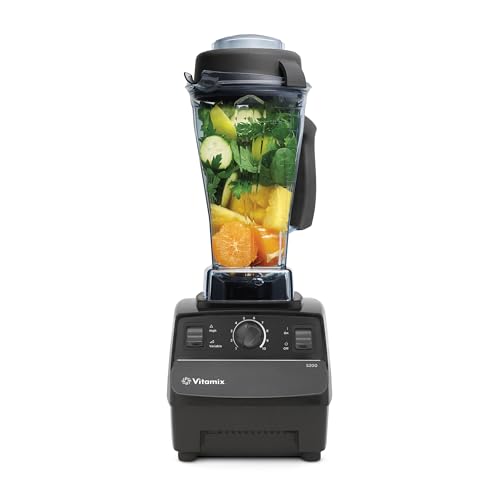
- Countertop jug blender with a tamper. The all-rounder for greens and frozen fruit.
- Blender with a personal-cup attachment. If you want both a jug and a single cup.
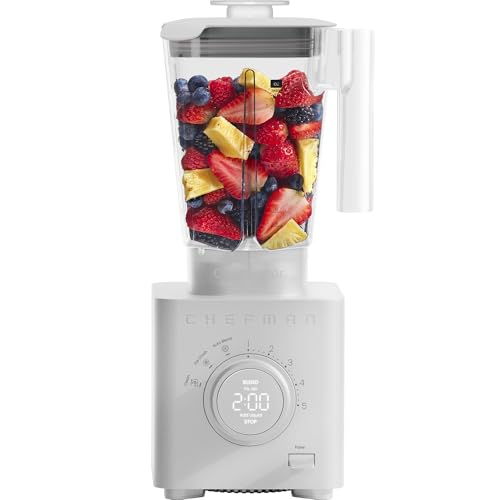
- Compact high-speed blender. For smaller kitchens.
The cards below link to Amazon searches for these types.
Who each choice is for
Daily green smoothies
A strong motor and a tamper.
Nut butters and soups
Look for motor power and a tamper.
Questions this page answers
Do I need a high-speed blender for green smoothies?
Not for spinach. For kale stems and frozen fruit, a stronger motor helps.
Is a high-speed blender better than a juicer?
They make different drinks. See juicer vs blender.
What size jar do I need for a green smoothie for four?
Our green smoothie scaled to four servings makes about 40 fl oz, so a 64 fl oz jar filled to three-quarters is the smallest of the common sizes that fits.
Sources: USDA FoodData Central.
General buying information, not medical or nutrition advice. We have not tested these products hands-on; specs come from the maker pages named above. See how we choose.