Why cleaning tools matter more than the juicer
Most people who stop juicing say cleanup is the reason. Pulp dries into the mesh of a screen or basket within minutes, and a dry screen is far harder to clear than a wet one. The right brush and the habit of rinsing at once turn a fifteen-minute chore into a two-minute one. The how often to clean a juicer guide covers timing, and cleaning the mesh screen covers technique.
Brush types and what each is for
Brushes differ by bristle stiffness and shape. The bristle guide is in bristle types explained; here is the short version.
Our reading of the jobs. Not a test of named brushes.| Brush | Job | Watch for |
|---|
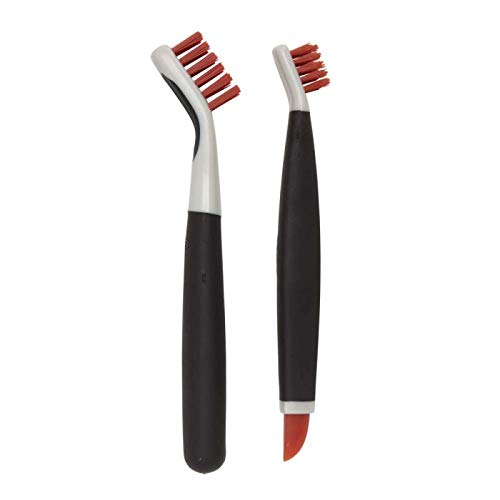
| Flat or round stiff-bristle brush | Mesh screens, baskets and strainers | Bristles too hard can scratch a plastic screen; check the maker's advice |
|---|
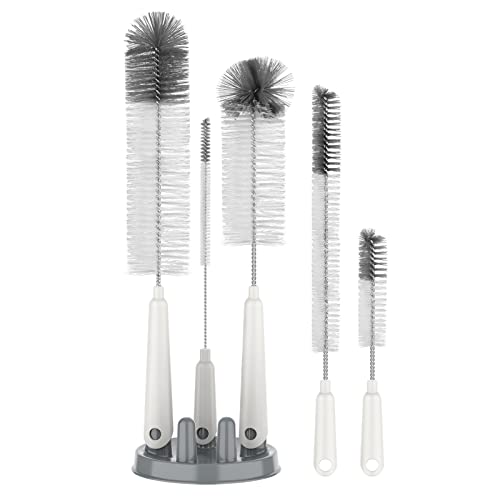
| Long narrow brush | Spouts, chutes, tubes | Pick one with a loop for hanging |
|---|
| Bottle brush | Juice jugs and bottles | Replace when bristles splay |
|---|
| Small detail brush | Seals, gaskets and screw threads | Use a soft toothbrush as a substitute |
|---|
| Sponge or soft cloth | Outer surfaces, bowls | Do not use on fine mesh |
|---|
A two-minute routine
- Unplug and take the juicer apart as the manual shows.
- Rinse every part under running water straight away, while pulp is wet.
- Brush the screen from the inside out with the brush, under running water.
- Wash with soapy water, or place in the dishwasher if the maker says the part is dishwasher safe.
- Air-dry parts fully before storing, so mould cannot form.
Do the same after every session. For a deep clean once in a while, soak the screen in warm water with a tablespoon of baking soda.
Stains and smells
Carrot, beet and turmeric stain plastic; ginger and greens leave smells. A soak in warm water with a spoon of baking soda, or a few minutes in the sun, lifts most stains from plastic parts. Vinegar diluted with water helps with hard-water film on glass jugs. Do not use bleach on parts that touch food unless the maker says so.
Mesh screens
The screen is the delicate part: a fine metal or plastic mesh with thousands of holes. Never scrub with a hard abrasive pad, and do not use a knife to scrape pulp off. If holes stay clogged, soak the screen in warm soapy water for 15 minutes, then brush again. Replace a screen that is bent or has torn mesh, because it lets pulp through. The maker's manual is the reference; the juicers hub shows how the parts differ by type.
Safety
Unplug before cleaning. Fast juicers have sharp cutting discs: wash them with the brush, not your fingers, and store them with the cover on. Dry cutters before storing.
Know your juicer's parts
Cleaning is quicker once you know which parts touch food. On a slow juicer these are usually the hopper, chamber, auger, screen, a pusher, and the juice and pulp containers; Hurom's box lists nine for the H320 (including a spinning brush and two strainers) and seven for the H400. On a fast juicer they are the lid, basket, cutting disc, jug and pulp bin; Breville does not give a number on the pages we read. Spend ten minutes with the manual and lay the parts on a towel in the order they come apart. Photograph the assembly once so you can rebuild it.
Choosing a brush that fits
Most juicers come with a brush, and the maker's brush is the first one to use. It matches the mesh. If you buy another, check the bristle diameter against the screen's holes and the length against the chute or the spout. A brush with a hanging loop dries better than one left in a sink. Replace a brush when bristles bend or fall out, because a flattened brush smears pulp instead of clearing it.
Drying, storing and mould
Moisture trapped in a closed juicer breeds mould and smell. After washing, lay parts on a rack so air reaches all sides, then reassemble loosely or store parts together in a clean cupboard. If a part develops black spots or a persistent smell, replace it; do not scrub and reuse a part that shows mould. Wipe the base with a damp cloth; never submerge it.
How long each task takes, honestly
Rinsing parts right after juicing takes about a minute for a fast juicer and two for a slow one with a fine screen; brushing the screen adds another minute. A deep soak is hands-off and takes fifteen to thirty minutes. These are our estimates from the number of parts and steps, not timed tests. Slow juicers with fewer parts, like the Hurom H400 in our list, save steps; fast juicers have a basket and disc that must be brushed carefully.
What you wash after one session
Cleaning time depends on the number and shape of the food-contact parts. The table shows the parts count where the maker or our box-list count gives one. Where the maker's page lists no parts, we do not guess.
From content/data/juicers.json, checked on the maker pages 2026-11-14. 'Not stated' = no figure on the page.| Model | Food-contact parts | Design |
|---|
| H320 Slow Juicer | 9 listed parts that touch food (auger, 2 strainers, spinning brush, chamber, hopper, juice and pulp containers, pusher) | Slow juicer |
|---|
| H400 Easy Clean Slow Juicer | 7 listed parts that touch food (two-part auger, chamber, hopper, pusher, juice and pulp containers) | Slow juicer |
|---|
| Juice Fountain Compact (BJE200) | not stated | Centrifugal |
|---|
| Juice Fountain Cold (BJE430) | not stated | Centrifugal |
|---|
| Juice Fountain Cold Plus (BJE530) | not stated | Centrifugal |
|---|
More parts means more places for pulp to dry. A brush that reaches the screen and a small brush for the lid seal matter more than a long list of accessories.
Drying and storing the parts
Trapped water breeds smells, so dry parts upright on a rack with air around them, and leave the lid off the pulp container. Store the brush hanging or standing, bristles up, so it dries too. Keep the small parts, such as seals and the spinning brush, in one box so none go missing, and check the seals for cracks when you reassemble.
Problems and fixes
- Orange or green stain on plastic parts. Soak in warm water with a spoonful of baking soda, then rinse.
- A cloudy film on the screen. Brush the screen under running water, then soak briefly in warm soapy water.
- A sour smell. Pulp was left in a seam: take the part apart fully and brush the seam.
- Slow juicing. A blocked screen is the common cause; clean it before you suspect the motor.
Picking a brush
Match the bristles to the screen. A fine screen or mesh needs soft, dense bristles so it is not scratched or bent; a coarse part can take stiffer bristles. A brush with a narrow head reaches the slots in an auger chamber, and a small straight brush reaches the lid seal. The two brush guides on this site compare bristle types and what else belongs in the kit. Replace a brush when the bristles splay or lose their shape.
Cleaning in five steps
- Take the parts apart over the sink as soon as the last juice is out.
- Rinse everything under running water before pulp dries.
- Brush the screen or mesh from the inside out, so pulp is pushed away from the holes.
- Wash with warm soapy water and rinse again; check dishwasher guidance on your model.
- Air-dry the parts upright, then reassemble when they are fully dry.
Our cleaning-frequency guide gives a routine, and the mesh screen guide covers stubborn pulp.
Category picks
- Stiff-bristle screen brush. The one tool to have.
- Long narrow spout brush. For tubes and jug spouts.
- Drying rack. To dry parts fully.
- Soft bottle brush. For jugs and bottles.
The cards below link to Amazon searches for these categories.
Who each choice is for
Slow juicer owners
A screen brush and a detail brush.
Fast juicer owners
A stiff-bristle basket brush.
Anyone short of time
Rinse at once. It is the biggest saver.
Questions this page answers
Can I clean a juicer in the dishwasher?
Some parts, yes; check the maker's manual for each part.
How many parts does a juicer have to wash?
Hurom's box lists nine food-contact parts for the H320 and seven for the H400 (our count). Breville's pages give no count, so we do not state one.
Sources: FDA, juice safety.
General buying information, not medical or nutrition advice. We have not tested these products hands-on; specs come from the maker pages named above. See how we choose.