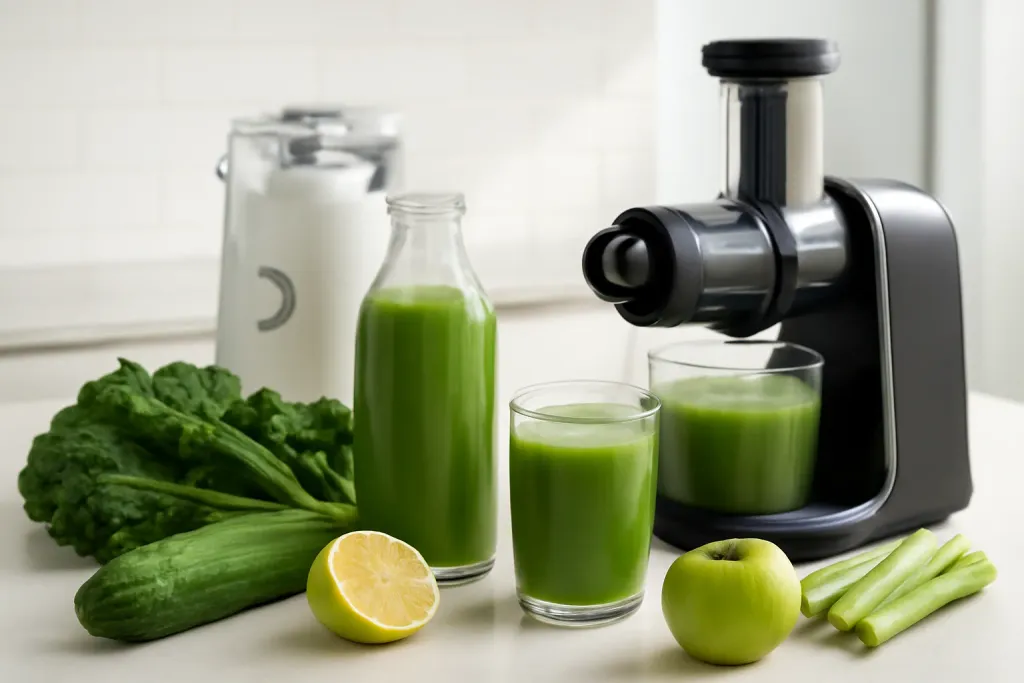
Vertical vs. Horizontal Masticating Juicer: The Basic Difference
If you are comparing a vertical vs horizontal masticating juicer, the main difference is the layout of the auger and feed chute. Both types use a slow pressing motion rather than fast spinning blades, but they are arranged differently and tend to fit different kitchens, routines, and ingredient habits.
A vertical model stands upright and usually uses gravity to help ingredients move downward through the juicing chamber. A horizontal model sits longer from front to back and feeds produce into a side-mounted chamber. Neither layout is automatically better for everyone. The better choice depends on what you juice most often, how much counter space you have, and how comfortable you are with prep and cleanup.
For many home users, the decision starts with everyday practicality. If you want a machine that feels compact and easy to place on a counter, a vertical design may be appealing. If you prefer a more traditional layout and expect to work with leafy greens, celery, herbs, or specialty recipes, a horizontal design may be worth a closer look.
How Each Design Feels in Daily Use
In daily use, the two styles create different workflows. A vertical masticating juicer often feels more streamlined because ingredients drop into the chamber from above. That can be convenient for beginner juicers who want a simpler setup and a smaller footprint on the counter.
A horizontal masticating juicer often asks for a little more hands-on feeding. Produce may need more pushing and more attention to feeding order. Some users like that because it gives them a sense of control over the process. Others prefer the hands-off convenience of a vertical design.
Think about the foods you actually keep at home. If your routine includes apples, cucumbers, carrots, and similar produce, either style can be workable. If you regularly make greens-heavy juices or want to experiment with herbs and softer ingredients, horizontal designs are often part of the conversation because of the way they handle prep and feeding.
Another practical point is batch size. A vertical unit may feel easier when making a single glass or a small morning portion. A horizontal machine may feel more suited to a slower, more deliberate juicing session where you are comfortable pausing to arrange ingredients as you go.
Counter Space, Storage, and Kitchen Fit
Kitchen footprint matters more than many shoppers expect. A vertical masticating juicer generally takes up less horizontal room, which can be useful in smaller kitchens, apartments, or shared spaces where counter depth is limited. Its upright shape can make it easier to leave assembled between uses, though storage still depends on your cabinet height and available shelf room.
A horizontal juicer usually needs more left-to-right space. That can be fine in a larger kitchen, but it may feel bulky if your counters are crowded with air fryers, blenders, coffee equipment, or baking tools. The longer body may also make it less convenient to store fully assembled.
Storage questions matter for beginners because a juicer that is hard to reach tends to get used less often. If you want a machine you can pull out quickly for weekday juice or simple green smoothie prep, measure the space where it will live before buying. Check both countertop footprint and cabinet clearance, especially if you plan to store the pitcher, tamper, or extra screens nearby.
It also helps to consider cable length, part count, and where you will place the pulp container and juice collection cup. Even a compact machine can feel inconvenient if your kitchen layout forces awkward movement during assembly or cleanup.
Ingredients, Prep, and Feeding Habits
Ingredient prep is one of the clearest differences between vertical and horizontal styles. Most masticating juicers work best when produce is cut into manageable pieces, but the amount of prep you are willing to do can shape which design feels easier.
Vertical models often feel friendly to casual, mixed-ingredient juicing because gravity helps guide items downward. That can make them feel less demanding during ordinary use. However, you still need to prepare greens, fibrous produce, and hard vegetables in a way that keeps the feed chute from clogging.
Horizontal models may be preferred by users who enjoy layering ingredients more deliberately. For example, you might alternate soft and firm items or feed greens in smaller handfuls. This can be helpful if you like to make recipes with celery, parsley, spinach, cucumber, apple, ginger, or lemon in rotating combinations.
For beginner-friendly green juice, a simple approach is usually easiest: wash produce, trim thick stems, cut larger pieces, and feed slowly. For smoothies, remember that a masticating juicer is not the same as a blender. If you want thicker texture, a blender remains the more natural tool. If your goal is a smoother juice, a masticating machine can fit that purpose better.
Browse our recommended products
Our featured picks refresh periodically. While we update them, our editorial guides can help you find the right pick.
See our guidesCleanup, Pulp Handling, and Routine Maintenance
Cleanup is often the deciding factor after the first few uses. A juicer that looks appealing on paper can become frustrating if it is hard to disassemble, rinse, or reassemble. The difference between vertical and horizontal models is not just about how they juice; it is also about how they fit into your cleaning routine.
Vertical juicers may be easier to rinse quickly because the chamber is compact and the parts are arranged in a stacked layout. That said, the exact cleaning experience depends on the model design and the number of parts. A simpler parts list usually makes cleanup easier than a more complicated one.
Horizontal juicers often involve a longer path for juice and pulp to travel, which can mean a slightly different cleanup pattern. Some users appreciate the more accessible layout of the chamber and pulp outlet, while others prefer the simplicity of a compact vertical build. Either way, it is wise to rinse parts soon after use so residue does not dry on screens or seals.
Pulp management also matters. If you like to save pulp for baking, soups, or other kitchen uses, check whether the container is easy to remove and empty. Beginners often overlook this detail, but it affects daily convenience as much as the motor style or feed position.
Which Style Suits Different Home Users?
If you are a first-time juicer, a vertical model may feel more approachable because it typically has a smaller footprint and a straightforward loading style. That can make it easier to work into a morning routine without turning the counter into a project station.
If you juice often and like to prepare larger batches or spend more time with ingredient combinations, a horizontal design may be attractive because it gives you a different workflow and may feel more controlled. It can be especially appealing if you do not mind extra prep and want a machine that supports a slower, more methodical process.
Households with limited storage may lean vertical, while households with a dedicated prep area may be comfortable with horizontal. If you share a kitchen, a quieter-looking compact profile can be easier to keep out and ready. If you prefer equipment that stays tucked away after use, either style can work, but the horizontal body may require more cabinet planning.
For shoppers building a small home beverage setup, the juicer decision also connects to other tools. A blender may cover smoothie texture, while a masticating juicer focuses on fresh juice. If you want both, think about how each appliance will fit beside your storage containers, cutting board, and produce bins.
A Practical Shopping Checklist Before You Buy
Before choosing between vertical and horizontal, look past the shape and compare the details that affect everyday use. These practical questions are often more helpful than broad marketing language.
- How much counter space can you realistically spare?
- How often will you juice, and in what batch size?
- Do you prefer faster setup or more deliberate feeding?
- Will you juice mostly greens, fruits, or a mix of both?
- How many parts will you need to wash after each use?
- Where will the machine and accessories be stored?
- Do you want a compact footprint or a more stable, longer layout?
It is also smart to check what comes in the box and how the accessories are organized. A second screen, extra container, cleaning brush, or recipe guide may affect convenience even more than the design style. For an affiliate-minded shopper, these details help you compare value without relying on exaggerated claims.
If you are unsure, start by making a list of your top priorities. For example, a beginner may rank easy storage and simple cleanup above everything else, while a more experienced juicer may care more about ingredient flexibility and workflow. The right answer is the one that fits your kitchen habits, not the one that sounds most impressive.
Bottom Line: Choosing the Right Layout for Your Routine
When comparing a vertical vs horizontal masticating juicer, the best choice usually comes down to lifestyle fit. Vertical models tend to appeal to shoppers who want a compact, upright design and a simple daily footprint. Horizontal models tend to appeal to shoppers who want a longer, more traditional layout and do not mind a more hands-on approach.
Neither style is automatically better for every kitchen. If your main priorities are limited space, straightforward setup, and casual everyday juicing, vertical may be the easier starting point. If your priorities are ingredient control, a larger working area, or a workflow that feels more deliberate, horizontal may be the stronger match.
For home users building a beginner-friendly juice habit, the most useful question is not which style is “best” in general, but which one you will actually use. A juicer that fits your counter, storage, and cleanup tolerance is usually the one that earns a regular place in the kitchen.