Starting Your First Week of Juicing
If you are planning your first week of juicing, it helps to keep the goal simple: learn the routine, keep prep easy, and notice what makes the process feel sustainable in your kitchen. For most beginners, the early days are less about perfect recipes and more about building a repeatable habit.
Expect a learning curve. You may spend extra time washing produce, trimming stems, peeling citrus, or figuring out which ingredients fit your juicer or blender best. That is normal. The first week is often when people realize that juicing is not only about the drink itself; it is also about the workflow around it, including storage containers, cutting boards, strainers, and cleaning tools.
A practical approach is to start with a short ingredient list. Pick a few familiar fruits and vegetables, then repeat them in different combinations. This keeps shopping and prep manageable while you learn how much time you actually want to spend in the morning or evening.
What Your Kitchen Routine May Feel Like
The biggest change in the first week is often the extra kitchen activity. Fresh produce needs to be rinsed, chopped, and used while it is still in good condition. If you are using a juicer, you will also need a spot for the pulp and a plan for cleanup. If you are using a blender, you may spend more time adjusting liquid levels and texture.
Many beginners find it helpful to set up a small prep station before they start. Keep your knife, peeler, cutting board, measuring cup, and storage containers within reach. If you like making green juice or smoothies before work, prep the night before by washing greens and portioning fruit into containers or bags. This is one of the easiest ways to make the routine feel less rushed.
Cleaning is part of the habit too. Some machines are simpler to rinse right away than to leave for later, so it pays to clear a few minutes after drinking. A sink-side scrub brush, bottle brush, or drying rack can make the process feel more organized.
How Your Taste Buds May Adapt
In the first week of juicing, flavors can feel more intense than expected. Greens may taste sharper than they do in a salad, and vegetable-forward blends may seem less sweet if you are used to packaged drinks. That does not mean you are doing it wrong. It usually means your recipes are new to your palate.
For beginners, it often helps to balance stronger greens with milder ingredients. Cucumber, celery, apple, pear, lemon, and ginger are common building blocks because they can make a drink feel more approachable without requiring complicated recipes. If you are making smoothies, banana, avocado, yogurt alternatives, oats, or nut butter can soften the flavor and texture.
You do not need to force every drink to be heavily vegetable-based on day one. Many people do better when they start with familiar flavors and slowly increase the amount of greens. That way, the routine feels more manageable and less like a sudden overhaul of your usual breakfast or snack.
Simple Tools That Make the Week Easier
The right setup can make your first week of juicing feel a lot smoother. You do not need a complicated kitchen, but a few basic items can help you stay consistent and reduce friction.
A reliable juicer or blender: Choose the machine that matches your main goal. Juicers separate juice from pulp, while blenders keep the whole ingredient in the cup and are better for thicker drinks.
Sharp knife and cutting board: Smaller, even pieces are easier to feed into a juicer and simpler to blend.
Storage containers: Glass jars, bottles, or airtight containers can help you keep extra juice or smoothie ingredients ready for the next day.
Mesh strainer or nut milk bag: These can be useful if you want a smoother texture or if your recipe leaves more fiber behind.
Brushes and drying tools: A small cleaning brush, bottle brush, and rack can help you keep parts and containers tidy.
If you are shopping for Amazon affiliate-friendly kitchen gear, focus on practical features rather than flashy extras. Beginners usually benefit more from easy assembly, simple cleanup, and a size that fits their counter and storage space.
Browse our recommended products
Our featured picks refresh periodically. While we update them, our editorial guides can help you find the right pick.
See our guidesHow to Plan Produce for the First Week
Buying produce for the first week of juicing can feel overwhelming at first, but a short list is usually enough. Start with items you know how to use in other meals so nothing goes to waste if your juicing routine changes.
A balanced beginner cart might include leafy greens, cucumbers, celery, apples, oranges, lemons, limes, carrots, ginger, bananas, berries, and a few herbs if you like them. From there, build a simple rotation instead of trying to buy every ingredient at once. This keeps your fridge from getting crowded and helps you notice which items you reach for most often.
It also helps to think about storage life. Greens tend to be more delicate than apples or citrus, so plan to use them early in the week. Harder produce can usually wait a few days longer. If your schedule is unpredictable, buy smaller amounts more often rather than trying to stock up too far ahead.
Prepping produce right after shopping can save time later. Wash, dry, and portion items into containers so you can grab what you need without starting from scratch each time.
Easy First-Week Recipes to Start With
The best recipes for the first week of juicing are the ones you can repeat without much effort. Keep the ingredient lists short and the flavor profile familiar. That gives you a reliable base and helps you learn how your equipment handles different textures.
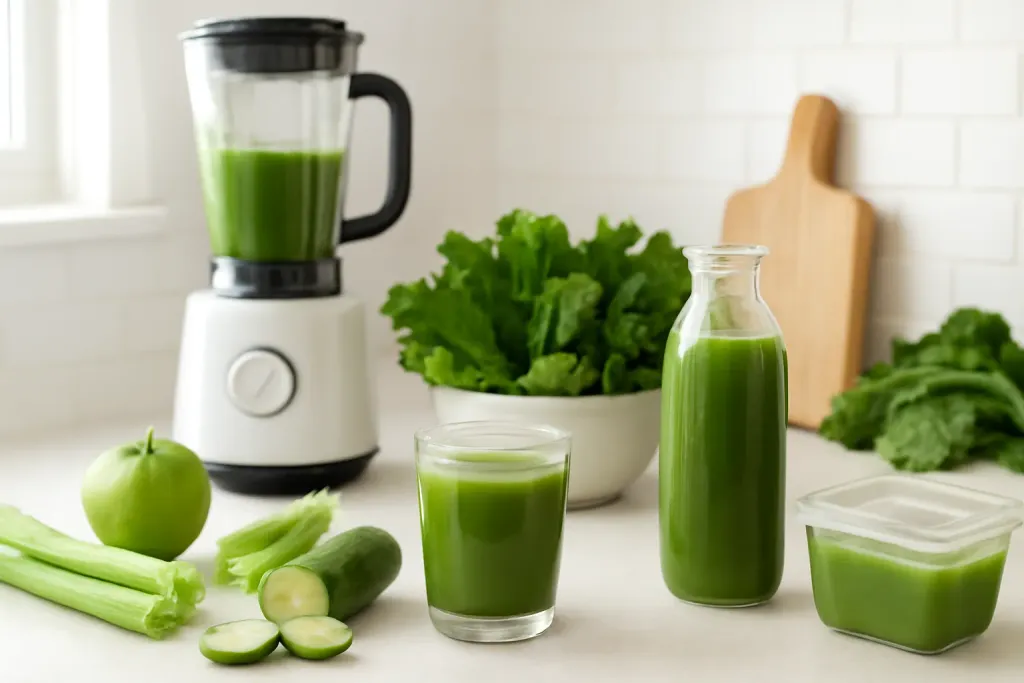
Simple green juice idea: cucumber, celery, green apple, lemon, and a small handful of spinach. This is a common beginner-style combination because it keeps the flavor bright without relying on too many ingredients.
Mild green smoothie idea: spinach, banana, frozen mango, and unsweetened milk or plant-based milk. This works well if you want a thicker, more filling drink and prefer a softer green flavor.
Citrus-forward juice idea: orange, carrot, and a small piece of ginger. This can be a comfortable bridge recipe for people who are new to juicing and want something that feels familiar.
Berry smoothie idea: mixed berries, yogurt or a yogurt alternative, oats, and liquid of choice. This is useful for mornings when you want a quick breakfast-style option rather than a lighter juice.
In your first week, it is fine to repeat one recipe several times. Consistency can teach you more than trying a new combination every day.
Storage and Make-Ahead Tips
Storage matters more than many beginners expect. Fresh juice and smoothies are easiest when they are made and consumed soon after preparation, but life does not always work that way. If you want to prepare ahead, use clean, airtight containers and refrigerate promptly.
For juice, smaller containers can be helpful because they reduce the amount of air in each bottle. For smoothies, portioning ingredients into freezer-safe bags or containers can make busy mornings easier. You can also pre-chop fruits and vegetables and keep them chilled so assembly takes only a minute or two.
Labeling can help during the first week, especially if you prep multiple recipes at once. A simple note with the recipe name and date is often enough to keep your fridge organized. If you notice ingredients getting soft or wilted, move them toward the front of the fridge so they are used first.
Not every ingredient stores the same way, so it is useful to keep your routine flexible. Some items are best bought for same-day use, while others can be set aside for later in the week without much trouble.
Building a Routine You Can Keep
The real goal of the first week of juicing is not to do everything perfectly. It is to find a routine that works with your schedule, your equipment, and your tolerance for prep and cleanup. If a recipe takes too long or creates too much mess, simplify it. If you prefer smoothies over juice, lean into that. If you like one green drink in the morning and a lighter snack later, that may be enough to make the habit stick.
Try to notice what creates friction. Maybe you need a larger container, a different chopping method, or fewer ingredients per recipe. Maybe you prefer using a blender because cleanup is easier for your household. These small observations are more valuable than trying to follow a rigid plan from day one.
By the end of the week, you should have a clearer sense of what you like to buy, what you like to drink, and how much time you want to spend preparing it. That makes it easier to build a simple home setup that supports your routine instead of complicating it.