Kale vs. Spinach for Green Juice: The Short Version
If you are deciding between kale vs spinach for green juice, the biggest difference is how each one affects the final sip. Kale usually gives a more assertive, grassy, slightly bitter profile, while spinach tends to taste milder and blend into the background more easily. That makes spinach a common starting point for beginners, especially if you want a softer flavor with less leafy intensity.
Texture matters too. Kale can leave a more noticeable fibrous edge if it is not processed well, especially in a juicer or a basic blender. Spinach is generally smoother and easier to drink, which can be helpful when you are still getting used to green juice at home. Neither green is “better” in every situation. The right choice depends on how much bite you want, what equipment you use, and whether you prefer a brighter, thinner drink or a thicker, softer one.
For many home juicing setups, the best answer is not an either-or choice. Both greens can work well alone or together, and both can be balanced with cucumber, apple, pear, celery, lemon, or ginger. If your goal is a green juice you can actually finish, the flavor and texture of the leafy base matter more than following a strict formula.
How Kale Tastes in Green Juice
Kale brings a bold flavor that stands out quickly. In juice, it often reads as earthy, grassy, and a little bitter, especially compared with milder greens. That stronger profile can be appealing if you like a more pronounced vegetable taste, but it can also dominate a recipe if you use too much or pair it with only subtle ingredients.
Curly kale is often the first variety people think of when they picture green juice. It has a lively, leafy flavor that can feel sharp if the rest of the recipe is very light. Lacinato kale, sometimes called dinosaur kale, usually comes across a bit less rugged in flavor, though it still has more presence than spinach. For home juicers, the important point is not the variety alone, but how it balances with fruit and citrus.
Because kale’s flavor is more assertive, it tends to work best when you want the green element to be obvious. It pairs well with apple for sweetness, lemon for brightness, and cucumber for a cleaner finish. If your green juice tastes too intense, a smaller amount of kale often helps more than adding more sweeteners. The goal is balance, not hiding the green completely.
How Spinach Tastes in Green Juice
Spinach is usually the gentler choice in the kale vs spinach for green juice conversation. Its flavor is mild, soft, and relatively neutral, which makes it easy to combine with other ingredients without taking over the glass. If you are new to green juice or making drinks for someone who prefers a lighter taste, spinach is often the easier starting point.
Because spinach does not have as much bitterness as kale, it can create a smoother overall impression. That does not mean it tastes bland; it simply leaves more room for fruit, citrus, herbs, or cucumber to show through. If you like your juice to taste fresh rather than strongly leafy, spinach usually fits that goal well.
Spinach is also useful when you want a green drink that feels approachable in a blender. In smoothie recipes, it tends to disappear more fully into the mix, especially with banana, pineapple, mango, or yogurt alternatives. For home cooks who value a mild flavor and a soft mouthfeel, spinach can be the most forgiving green to keep on hand.
Texture: What Each Green Does to the Drink
Texture is where the differences between kale and spinach become especially clear. Kale has more structure in the leaf, so it can leave a fuller, more fibrous impression if the recipe is not well strained or well blended. In juice, that can translate into a slightly rougher finish. In smoothies, kale may contribute a thicker, leafier body unless it is blended thoroughly.
Spinach has a softer leaf and generally feels smoother in the glass. In juiced recipes, it tends to blend into a lighter, more even texture. In smoothies, it usually creates less noticeable graininess than kale, particularly when paired with frozen fruit, oats, or nut butter. That makes spinach a practical option for beginners who want a green drink that feels less “green” in texture as well as flavor.
Equipment can change the experience. A centrifugal juicer, a masticating juicer, and a blender each handle leafy greens differently. With a blender, you may need to strain the juice if you want a cleaner texture. With a juicer, kale’s fiber can be more noticeable if the leaves are not fed in gradually. Spinach is more forgiving across most setups, which is one reason it appears often in easy home recipes.
Browse our recommended products
Our featured picks refresh periodically. While we update them, our editorial guides can help you find the right pick.
See our guidesBest Use Cases for Beginners
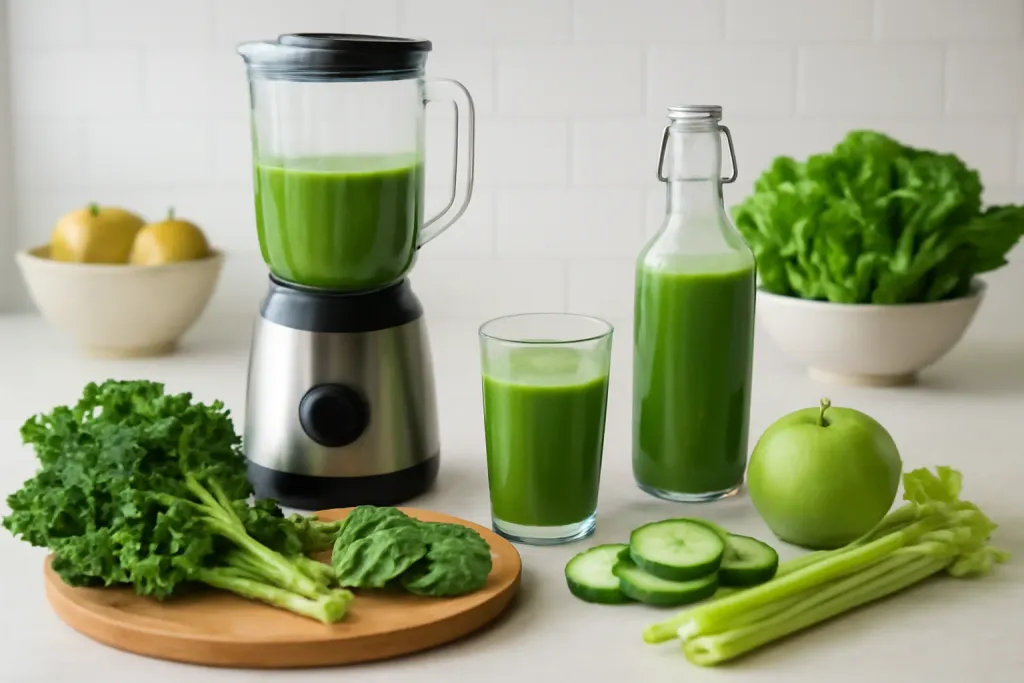
If you are just getting started with green juice, spinach is usually the easiest first step. Its mild flavor and smoother texture make it simpler to mix with common grocery-store ingredients. A basic spinach juice can be built with cucumber, green apple, lemon, and a small piece of ginger for brightness. That kind of recipe keeps the leafy taste present without making the drink feel heavy.
Kale makes more sense once you want a stronger green profile or plan to pair it with bolder flavors. If you enjoy a more herbal or earthy drink, kale can be a good match. It also works well when you are making a larger batch and want the green base to stay noticeable even after chilling. Still, beginners often find that a small amount of kale mixed with spinach gives the most balanced result.
For family-style or make-ahead recipes, spinach is often the safer crowd-pleaser. Kale can be great in a dedicated green juice routine, but its stronger flavor may not suit every palate. If you are experimenting at home, start with the green that feels easier to drink, then adjust the ratio based on your taste preferences.
How to Balance Flavor and Mouthfeel
Whether you choose kale or spinach, balance is what turns a leafy drink into something enjoyable. If kale tastes too strong, add cucumber for dilution, apple or pear for sweetness, and lemon for a cleaner finish. If spinach tastes too soft or watery, a small amount of kale, celery, or fresh herbs can give the juice more character without making it harsh.
For smoother texture, cut ingredients into manageable pieces before juicing or blending. Remove tough stems from kale when needed, especially if your machine is basic or if you want a less fibrous result. Spinach usually needs less prep, but washing it well and packing it evenly into the feeder or blender helps the texture stay consistent.
If you are blending instead of juicing, add liquid gradually. A little water, coconut water, or citrus juice can help the blades move leafy greens more evenly. For a thinner drink, strain the mixture after blending. For a thicker smoothie, skip the straining step and rely on fruit to soften the green flavor. Small changes in liquid and fruit ratio can make either green much easier to enjoy.
Storage and Prep Tips for Home Kitchens
Leafy greens are easiest to use when they are already cleaned, dried, and ready for the week. Spinach and kale both benefit from storage in a breathable produce container or bag lined with a paper towel to help reduce excess moisture. Keeping them cold and dry can help preserve texture longer, which matters because wilted greens can make juice taste dull or look less appealing.
For prep, wash only what you expect to use soon if you want the freshest texture. If you batch prep, separate the greens into recipe-sized portions so you can grab and go without measuring every time. This is especially useful for beginners who want a repeatable routine rather than a new recipe every morning.
Juice can be best enjoyed soon after making it, particularly when flavor and texture are important. If you are storing a prepared green juice, use a sealed container and keep it cold. That said, fresh-made juice typically has the cleanest flavor and the lightest texture, which is why many home juicers prefer making smaller batches more often.
Simple Green Juice and Smoothie Ideas
For a beginner-friendly kale juice, start small: kale, cucumber, green apple, lemon, and a piece of ginger. This combination gives kale enough support so the flavor feels lively rather than harsh. If the result is still too strong, reduce the kale and increase the cucumber or apple.
For a spinach-forward juice, try spinach, pear, cucumber, and lemon. This version is lighter and smoother, with a gentle green note that works well for people who want less bitterness. If you are making it in a blender, add enough water or ice to help the mixture move freely, then strain if you want a cleaner drink.
For smoothies, spinach blends especially well with banana, mango, pineapple, or plain yogurt alternatives because its flavor stays soft. Kale can work in smoothies too, but using frozen fruit and enough liquid helps keep the texture from feeling too leafy. If you want a middle ground, combine both greens so spinach smooths out kale while kale keeps the drink from tasting too mild.