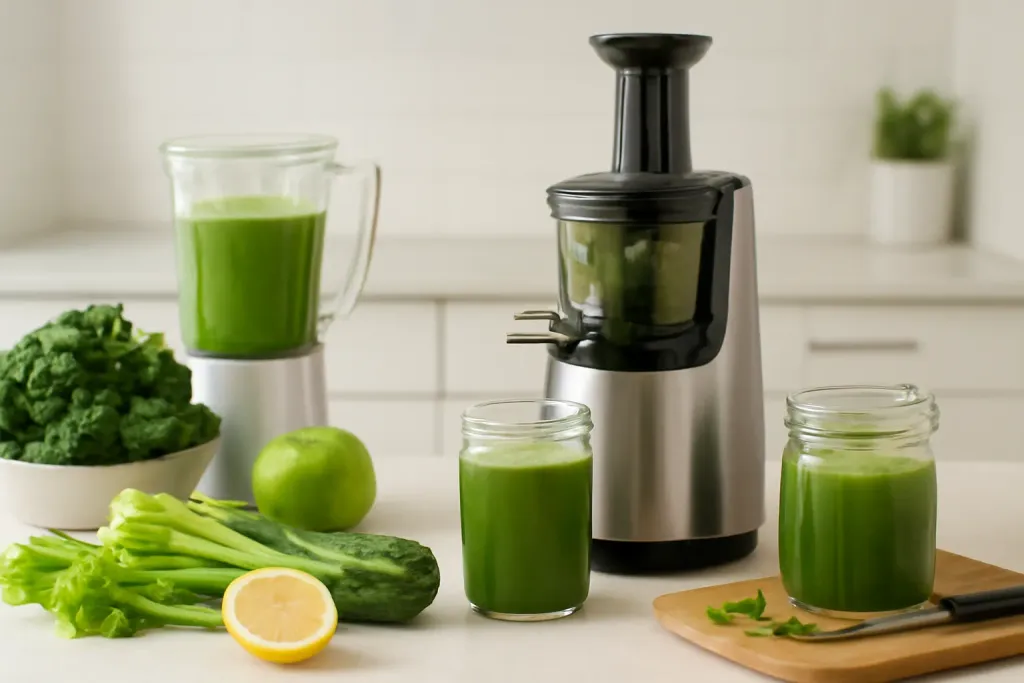
Plan the Small-Kitchen Juicing Setup
A successful small kitchen juicing setup starts with deciding what earns counter space and what should live in a cabinet. In a compact kitchen, the goal is not to display every appliance at once. It is to make juicing easy enough that you will actually use the equipment you own.
Begin by identifying a single home for the main juicer or blender, plus a nearby spot for the pieces you reach for most often. If your counter is limited, look for a setup that allows one appliance to stay out while the rest of the tools are stacked, nested, or stored vertically. Keep the workflow simple: wash produce, prep ingredients, juice or blend, then clean and put away.
It also helps to think in zones. One small zone can hold the machine, another can hold cutting tools and a bowl, and a third can hold jars, bottles, or cups. Even a narrow counter can work if each item has a clear place. The best setup is the one that reduces friction on busy mornings.
Choose Equipment That Fits the Space
When space is tight, appliance size matters as much as performance. A compact juicer or blender can be easier to store, easier to lift, and less likely to make the counter feel crowded. Before buying, measure the height, width, and depth of the space where the appliance will live, including clearance under cabinets.
Think about the kinds of drinks you actually make. If you mostly want green juice, a juicer may be your main tool. If you prefer smoothies, a blender may be more useful. Some households need both, but a small kitchen usually benefits from choosing one primary appliance first and adding the second only if it solves a real problem.
Pay attention to the accessories that come with the machine. Extra pusher tools, strainers, pitchers, and lids all need storage too. A simpler bundle can be easier to manage in a small kitchen than a model that arrives with many parts you do not plan to use every day. The right choice is often the one with the least storage burden, not the one with the most attachments.
Make Cleanup Part of the Routine
In a small kitchen, cleanup is part of the juicing system, not an afterthought. If the juicer takes too long to wash or its parts are awkward to dry, it is more likely to stay unused. Build a routine that includes rinsing immediately after use, washing the removable parts, and drying them in a dedicated spot.
A simple drying rack, tray, or towel-lined section of counter can help prevent clutter from spreading across the whole kitchen. If you juice in the morning, consider cleaning as soon as the drink is poured so the machine is ready for the next use. The less time parts sit with pulp or residue on them, the easier cleanup usually feels.
It is also useful to keep a small brush, sponge, or cleaning cloth near the machine rather than buried in a drawer. A tiny, visible cleaning kit makes follow-through easier. For compact kitchens, the best storage is often the storage that keeps cleanup tools within arm’s reach.
Organize Produce and Ingredients
Ingredient storage can make or break a small kitchen juicing setup. If produce is scattered across the refrigerator, it becomes harder to build a quick juice or smoothie. Group common items together so they are easy to see and easy to grab.
Use clear bins, shallow baskets, or labeled containers to separate leafy greens, citrus, apples, ginger, herbs, and smoothie add-ins. In the refrigerator, keep the most perishable ingredients in front so they are used first. On the counter, limit produce displays to items that can sit safely at room temperature and that you plan to use soon.
Prepping ingredients in advance can help even more. Wash greens, peel citrus if desired, and portion ingredients into reusable containers or bags. That way, the morning routine becomes assembly rather than full prep. For a beginner-friendly approach, keep a short list of ingredients that work in many recipes so you are not buying too much at once.
Browse our recommended products
Our featured picks refresh periodically. While we update them, our editorial guides can help you find the right pick.
See our guidesStore Jars, Bottles, and Portions Smartly
Reusable jars and bottles are useful, but they can quickly overwhelm limited cabinet space. Choose a small set of containers that nest or stack well, then store them together near the juicing area. Keep lids in the same container, divider, or basket so you are not searching for pieces every time.
If you make juice or smoothies ahead of time, use containers that fit your fridge shelves without forcing other groceries out of the way. A few uniform containers are often easier to manage than a random mix of sizes. Transparent glass or clear plastic can also make it easier to see what is ready to drink.
Think about portions before you prep. Small batches are usually more realistic in a compact kitchen, because they reduce the amount of container storage you need. If you are making breakfast drinks for one or two people, a modest number of bottles is enough. The objective is to keep the fridge organized, not to create a second storage problem.
Use Vertical Space and Hidden Storage
Vertical storage is one of the best tools for a small kitchen. Wall shelves, cabinet risers, pull-out drawers, and stackable bins can help free counter space for the appliance itself. If you have a narrow pantry or a tall cabinet, use it for overflow items that do not need daily access.
Inside cabinets, place heavier items on lower shelves and lighter accessories higher up. Stack lids, bowls, and spare containers in ways that keep them visible and easy to remove. If drawer space is limited, separate utensils and tools with dividers so you do not have to dig through a pile of gadgets.
Hidden storage also works well for backups. Extra filters, spare parts, recipe cards, or less-used attachments can live away from the main prep area. The more you can reserve the visible surfaces for active use, the more open and workable the kitchen will feel.
Build Beginner-Friendly Juice and Smoothie Habits
A small kitchen setup works best when the recipes are simple enough to repeat. Start with a few easy combinations that use overlapping ingredients, so your shopping list stays manageable. For example, you might keep leafy greens, cucumber, apple, lemon, banana, berries, and a neutral liquid on hand for flexible drinks.
For green juice, aim for combinations that are easy to prep and easy to remember. For smoothies, use a basic formula: liquid, fruit, greens or another vegetable, and a creamy element if desired. Keeping the structure simple helps reduce clutter because you do not need a large pantry of specialty add-ins.
Batching can also help, but in a compact kitchen it is usually better to batch ingredients than fully finished drinks. Pre-portioning smoothie packs or juice prep bags lets you assemble quickly without filling the fridge with too many containers. This approach keeps the routine practical for weekdays and easier to maintain over time.
Keep the Kitchen Functional Over Time
The hardest part of a small kitchen juicing routine is not the first setup. It is keeping the system from drifting into clutter. Every few weeks, look at what is actually being used and remove what is not. If a bottle, accessory, or ingredient has not earned a place, store it elsewhere or let it go.
Try to keep the main juicing surface clear at the end of the day. Even a tiny free area can make the kitchen feel more manageable in the morning. Resetting the space takes only a few minutes, but it has a big effect on whether the habit feels easy or annoying.
Finally, choose a routine that matches your real life. If weekday juicing is the main goal, design storage around speed and cleanup. If weekend smoothies are more realistic, make sure the equipment is easy to access and even easier to put away. A good small-kitchen system is flexible, modest, and built for repeat use rather than perfection.