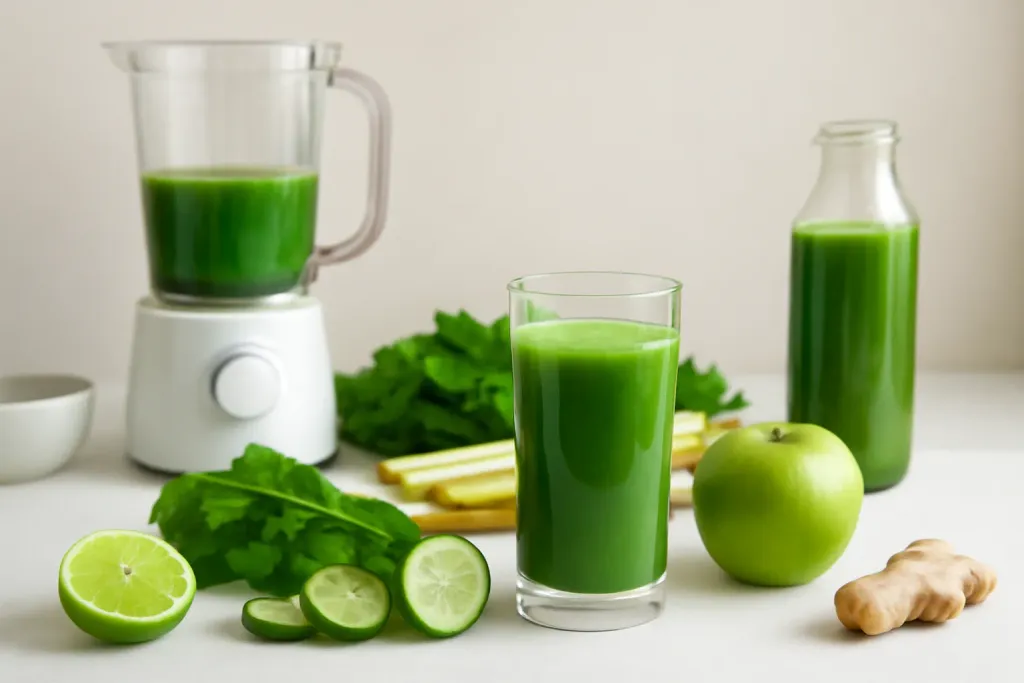
Why Ginger Needs a Light Touch
Ginger can make green juice brighter, sharper, and more interesting, but it can also take over quickly. That is why the best approach is to treat ginger as a background accent rather than the main flavor. When you use ginger in green juice, a little goes a long way, especially if your juice already includes bold greens like kale, parsley, or arugula.
The goal is not to hide ginger completely. It is to let it add warmth and lift without turning the glass into something hot and aggressively spicy. In a well-balanced green juice, ginger should support the fresh taste of cucumber, celery, apple, lemon, spinach, or mint. If the ginger is too strong, the juice can feel sharp and one-note. If it is used lightly, it can make the whole blend taste more complete.
For beginners, the easiest mindset is to start with less ginger than you think you need. You can always add more next time. It is much harder to recover a batch that tastes dominated by ginger. That is especially true in small-batch home juicing, where a single piece can change the flavor of the entire recipe.
Start With Small Amounts and Build Slowly
When making ginger in green juice, begin with a small piece and keep notes on what works for your taste. For many home recipes, a thin slice or a small knob is enough for a mild, fresh edge. If you are juicing for the first time, use less than you think you need and taste before deciding whether to adjust the next batch.
There is no universal amount that works for everyone because the rest of the recipe matters. A juice built around cucumber and apple will usually need less ginger than one built around kale, lemon, and celery. The same small piece can feel gentle in one recipe and intense in another. The juicer style matters too, because different machines handle fibrous ingredients in slightly different ways, which can affect how strongly ginger comes through.
A practical method is to treat ginger like seasoning. Add a little, blend or juice the rest of the recipe, then taste the result. If you want more warmth, increase the ginger next time rather than trying to fix a batch that already tastes too spicy. This is one of the simplest ways to keep green juice approachable for new drinkers.
- Use a small piece for your first batch.
- Keep the rest of the recipe mild and fresh.
- Adjust future batches instead of overloading one recipe.
- Write down the ratio that tastes balanced to you.
Pair Ginger With Mild Green Ingredients
The easiest way to keep ginger in green juice from overpowering the drink is to pair it with ingredients that soften its edge. Cucumber is one of the best options because it adds a clean, watery base. Celery also helps because it brings a crisp, savory note without adding much sweetness. Spinach is another beginner-friendly green because it tends to stay mild and smooth in juice.
Fruit can help too, but it works best when used with restraint. Green apple is a common choice because it gives the juice a bright, gentle sweetness that rounds out ginger without making the drink taste like dessert. Pear can do something similar. Lemon can sharpen the profile, but it should be used carefully if you already have a strong piece of ginger, because too much acidity can make the juice feel extra sharp.
Herbs can be useful in small amounts. Mint can soften the impression of ginger and make the juice feel cooler and fresher. Parsley can add structure, but use it with care if you prefer a mild drink. A balanced green juice usually combines one or two greens, one mild fruit, and a small amount of ginger instead of stacking too many intense ingredients at once.
- Mild base: cucumber, celery, spinach
- Softening fruit: green apple or pear
- Fresh accents: mint or a small amount of lemon
- Use fewer strong ingredients if ginger is already present
Choose the Right Form of Ginger
Fresh ginger is the most common choice for green juice because it brings a bright, direct flavor. Even so, the form you use matters. A larger piece, rough-cut chunks, or a long slice can all change how strong the ginger tastes in the finished juice. For a milder result, use a smaller peeled piece and keep the rest of the produce measured and simple.
Some home juicers can handle ginger more efficiently than others. If your machine has a wide feed chute, it may be tempting to add larger pieces, but that can make the flavor harder to control. With a slower or more compact machine, ginger may release flavor more gradually, which can make it easier to stay conservative. Either way, consistency matters more than force. The point is to make ginger a controlled part of the recipe, not the dominant ingredient.
Peeling is optional depending on the condition of the root and your preferred method, but cleaning it well is important. Trim any dry or rough spots and cut the ginger into manageable pieces so you can measure it accurately. That alone can help you avoid adding too much. When you are learning how to use ginger in green juice, small, neat prep is usually better than tossing in an unmeasured chunk and hoping for the best.
Browse our recommended products
Our featured picks refresh periodically. While we update them, our editorial guides can help you find the right pick.
See our guidesUse a Smart Juice Order and Balance Strategy
How you add ingredients can influence the final flavor. A thoughtful order can help ginger blend into the rest of the juice instead of hitting the palate all at once. If your machine allows it, alternate ginger with milder ingredients such as cucumber, apple, or spinach rather than placing all the ginger in one concentrated step. This can help distribute the flavor more evenly.
Balance also comes from the overall structure of the recipe. A strong green juice often needs a contrast between fresh, watery ingredients and sharper ones. Ginger gives you the sharpness, but it should be offset by enough volume from the milder ingredients. If the recipe is too small or too concentrated, the ginger will dominate. If the recipe has enough cucumber, celery, or apple, the ginger becomes a lively accent instead.
If you are using a blender rather than a juicer, the same idea still applies. Blend ginger in tiny amounts and keep the texture in mind. Since blended drinks include all the fiber, ginger can feel even more noticeable. In that case, you may want to combine ginger with more cucumber, spinach, and a small amount of fruit so the overall taste stays smooth and drinkable.
- Distribute ginger instead of adding it all at once.
- Give the recipe enough mild volume to support the spice.
- For blended drinks, use even less ginger than you would in juice.
Beginner-Friendly Flavor Combinations
If you are still learning how ginger in green juice behaves, simple combinations are the safest place to start. A cucumber-celery-spinach base with a small piece of ginger is a classic mild option. The cucumber keeps the drink cool, the celery adds structure, and the spinach stays in the background. That gives the ginger a clear role without making the whole juice feel spicy.
Another easy combination is green apple, cucumber, and ginger with a little lemon. This version tastes brighter and slightly sweeter, which can make ginger feel more approachable. If you want something more herb-forward, cucumber, spinach, mint, and a modest piece of ginger can taste clean and fresh without becoming harsh. For a slightly richer profile, pear can replace apple and soften the edges even more.
What usually makes ginger overpowering is not ginger alone, but the lack of support around it. A recipe built from only strong greens and a large piece of ginger will taste much more forceful than one with a mild base and a small amount of spice. Keeping recipes simple is often the best strategy for beginners because it makes it easier to understand what each ingredient contributes.
- Cucumber + spinach + small ginger piece
- Cucumber + green apple + ginger + a little lemon
- Celery + pear + cucumber + ginger
- Spinach + mint + cucumber + ginger
Store and Prep Ingredients for Better Control
Freshness affects flavor balance. When ginger and greens are in good condition, the juice tends to taste cleaner and easier to control. Store ginger in a cool, dry place or refrigerate it if that fits your kitchen routine. Keep greens crisp and wash them well before juicing. If ingredients are soft, wilted, or overly dry, the final drink can taste muddier, which may make the ginger seem harsher than it really is.
Prepping ingredients ahead of time can also help you avoid overdoing ginger. Cut the ginger into small, visible pieces and portion it for single batches. Store other produce in ready-to-use containers so the recipe comes together quickly and consistently. When you are not scrambling to assemble everything at once, it is easier to stick to your planned ratio.
For home juicing equipment, cleaning and setup matter too. A clean juicer or blender gives you a more predictable result, while leftover residue from a previous batch can alter the flavor of the next one. That matters most when you are trying to fine-tune a recipe with ginger, because small changes are easier to notice in a clean-tasting juice.
Troubleshooting and Final Tips
If your juice tastes too gingery, the first fix is not always to add more fruit. Sometimes the better move is to dilute the flavor with a second batch that uses the same ingredients but leaves out the ginger. You can then combine the two batches in a ratio that tastes right. This works especially well if you made a concentrated amount and want to bring the spice down without starting over.
If you are using ginger in green juice for the first time, aim for consistency before creativity. Use one recipe several times and adjust only one detail at a time. That might mean changing the ginger amount, then later changing the type of green or fruit. Small adjustments are easier to evaluate than big changes all at once.
The most reliable rule is simple: use ginger to brighten, not to dominate. Keep the piece small, pair it with mild ingredients, and let the recipe stay fresh and balanced. Once you know how much ginger your preferred greens can handle, you can make a juice that feels lively without losing the clean, green character you were aiming for.